
On the ground and in the air: SWISS Strengthens Citizen Development with Copilot Studio
Sectors: Non sector-specific

How SWISS Empowers Employees Company-Wide with ORBIS and Microsoft Copilot Studio
You don’t learn AI from slides. Swiss International Air Lines was looking for a training format for Microsoft Copilot Studio that would equally engage employees with a completely different levels of knowledge. Whether pilots or office staff, the company partnered with ORBIS to create a hands-on hackathon where participants work on real-world use cases and learn from one another in just one day.
Swiss International Air Lines AG
Industry: Aviation
Production Sites: Hubs in Zurich and Geneva
Products: Flights to over 110 destinations
Employees: Over 9,600
Website: www.swiss.com
Key Facts at a Glance
- Starting point: SWISS already offered structured learning paths for Power Automate and Power Apps, but there was still no hands-on, in-person training for Microsoft Copilot Studio for employees whose prior knowledge varied greatly.
- Solution: Together with ORBIS, SWISS developed a one-day Copilot Studio hackathon that combines a concise theoretical segment with work on participants’ own use cases in small groups.
- Highlight: Experienced programmers, employees with no technical background and two pilots worked together on real-world problems. This resulted in three AI agents that are currently under development.
- Result: The Power Platform’s learning path concept is now complete, and SWISS can continue the Copilot Studio training on its own – at least two sessions per year are planned.
With over 110 destinations, approximately 16.5 million passengers per year, and more than 9,600 employees, Swiss International Air Lines is Switzerland’s leading airline. Founded in 2002, SWISS connects Switzerland with the world from its hubs in Zurich and Geneva. As part of the Lufthansa Group and a member of Star Alliance, the airline is one of Europe’s most renowned airlines.
Citizen Development Requires Hands-On Training
Swiss International Air Lines is firmly committed to citizen development: employees from across the business independently develop applications and agents on the Microsoft Power Platform. The company already offered structured learning paths for Power Automate and Power Apps, including self-study, in-person training, and certifications.

As demand for AI agents grew, Microsoft Copilot Studio came increasingly into focus. Although self-study materials were available, there was still a lack of hands-on, in-person training. To develop a high-quality training program, SWISS specifically sought out a partner with in-depth experience with Copilot Studio.
The particular challenge here was that the participants’ prior knowledge varied greatly, ranging from experienced programmers to employees with absolutely no technical background. We needed a training concept that would engage everyone equally and effectively complement their existing learning paths.
Theory Meets Practice: The Copilot Studio Hackathon
The collaboration between SWISS and ORBIS did not begin with the Copilot Studio Hackathon. About a year earlier, ORBIS had conducted a Power Platform workshop that was well received at SWISS. The company subsequently refined its Power Platform strategy and further expanded its internal team. When an opportunity arose through Microsoft funding to seek external support for Copilot Studio training, renewing the partnership was a natural next step.
Together, we developed a one-day training format that combines foundational knowledge with practical application. A concise theoretical segment first introduced participants to Copilot Studio, after which they worked in small groups on their own use cases. Two ORBIS trainers rotated among the teams, providing targeted support. In total, this format was held twice, with approximately 15 to 20 participants each time.
What made the hackathon special was the diversity in the rounds. Experienced programmers sat alongside employees with no technical background whatsoever. Among them were two pilots who split their workdays between the cockpit and the office and contributed their own use case drawn from real-world flight experience. Instead of working on pre-designed exercises, everyone tackled real-world problems from their own professional lives. This deliberate mix fostered the exchange of knowledge far beyond departmental boundaries.

„At first, I was skeptical that the participants might be overwhelmed. But that’s exactly what turned out to be the positive takeaway: It worked very well. The people really worked together great in the groups.“
Ismael Liuzzi, Power Platform Team, Swiss International Air Lines

The hackathons yielded three key use cases that demonstrate the wide range of ways Copilot Studio can be used in everyday business operations:
- Audit Agent: SWISS must regularly demonstrate to regulatory authorities that it complies with norms and standards. The agent developed during the hackathon helps search through relevant documents, highlights which regulations are being met and how, and thereby makes the entire audit process significantly more efficient.
- Work Time Agent: Accurately tracking breaks, doctor’s appointments, and vacation days can be time-consuming, especially when dealing with complex groups of employees. In the future, an agent will serve as a digital assistant right next to the time-tracking tool, answering questions about work hours and absences.
- Expense Agent: Based on a similar principle, another agent is designed to help employees correctly record their expenses.
All three use cases are currently under development.
Even the first hackathon showed just how well the mix of theory and practice was received. Based on the feedback they gathered, SWISS and ORBIS further refined the concept for the second event. The theoretical portion was made even more concise and supplemented with live demos directly within the tool. At the end of each hackathon, participants voted on which use case was the most compelling. This playful element provided additional motivation.
„ORBIS not only trained our participants but also empowered us as a team to conduct the training on our own in the future.“
Ismael Liuzzi, Power Platform Team, Swiss International Air Lines
From a Hackathon to a Scalable Training Concept
Through these two hackathons, SWISS has not only provided further training to individual employees but has also developed a scalable training concept for the entire organization. The Power Platform’s learning path concept is now complete: self-paced learning, in-person training, and certification are available for every product, including Copilot Studio.
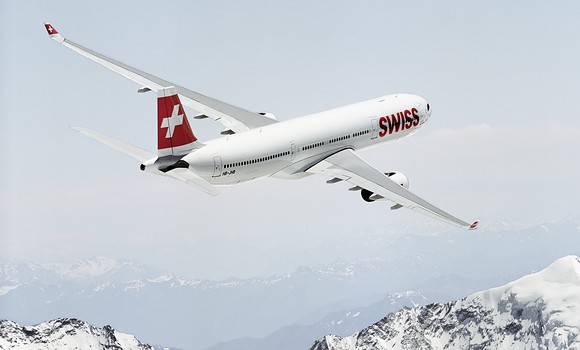
SWISS plans to conduct the training at least twice a year going forward, using the materials and formats developed in collaboration with ORBIS. At the same time, several teams are continuing to work on the use cases that emerged from the hackathon, ranging from the audit agent to time tracking.
The bottom line is that SWISS is now able to continue the Copilot Studio training program on its own and to continually adapt the program to meet new requirements.