


SAP Logistics Management: The Cloud-Based Solution for Futureproof Logistics Processes
In an increasingly volatile and globalized economy, the supply chain is the backbone of business success. Growing customer expectations, complex delivery networks, and the constant pressure to cut costs require software solutions that are not only responsive, but proactive too. This is where SAP Logistics Management (SAP LGM) positions itself: as one of the most advanced answers to the challenges encountered in modern logistics.
Nowadays, companies are facing decisions on how to position their system landscape for the future. Outdated, isolated on-prem systems hold back operational efficiency and prevent seamless scaling. SAP Logistics Management addresses precisely these pain points. As a fully integrated, cloud-native SaaS solution, it offers a standardized yet highly flexible approach to intelligently managing warehouse, transportation, and shipping processes.
SAP Logistics Management connects these processes in a modern cloud solution, laying a foundation for a standardized and scalable supply chain. Depending on the process complexity and requirements, the solution can be an alternative or a complement to established SAP solutions such as SAP Extended Warehouse Management (SAP EWM) or SAP Transportation Management (SAP TM).
What is SAP LGM? Where It Fits in the Modern Supply Chain
SAP Logistics Management is a modern, cloud-native software-as-a-service (SaaS) solution designed specifically to manage and optimize logistics processes in companies. Based on the powerful SAP Business Technology Platform (SAP BTP), the system combines warehouse management, transportation management, and shipping logistics in a unified cloud architecture.
Unlike the traditional, heavily customized on-prem systems of the past (such as the older SAP WM), SAP LGM takes an “out-of-the-box” approach. Strategically, the solution is aimed at companies looking for a highly standardized, quick-to-deploy, and easy-to-scale platform for medium-complexity sites.
Thanks to its consistent focus on the cloud, users benefit from automatic updates, reduced IT maintenance costs, and an architecture designed from the ground up for connectivity in the digital age. Seamless integration with higher-level ERP systems makes SAP LGM a key component for a resilient and agile supply chain.
The Range of Functions: Integrated Warehouse, Transportation, and Shipping Management
To ensure operational efficiency throughout the entire supply chain, SAP LGM breaks down the traditional silos between warehouse management and transportation planning. The solution offers holistic management of all physical movements of goods.
Modern Warehouse and Inventory Management
At the heart of SAP Logistics Management is the efficient handling of all intralogistics processes. The solution covers a product’s entire lifecycle within the four walls of the warehouse – from goods receipt and putaway to order-picking and goods issue.
The system supports warehouse workers with mobile applications and intuitive user interfaces that optimize walking paths and minimize order-picking error rates. Inventory management creates transparency over current stock levels and thus supports operational control. Processes such as physical inventories or complex stock transfers within the site are also guided and documented by the system through standardized workflows.
Optimizing Transportation and Shipping
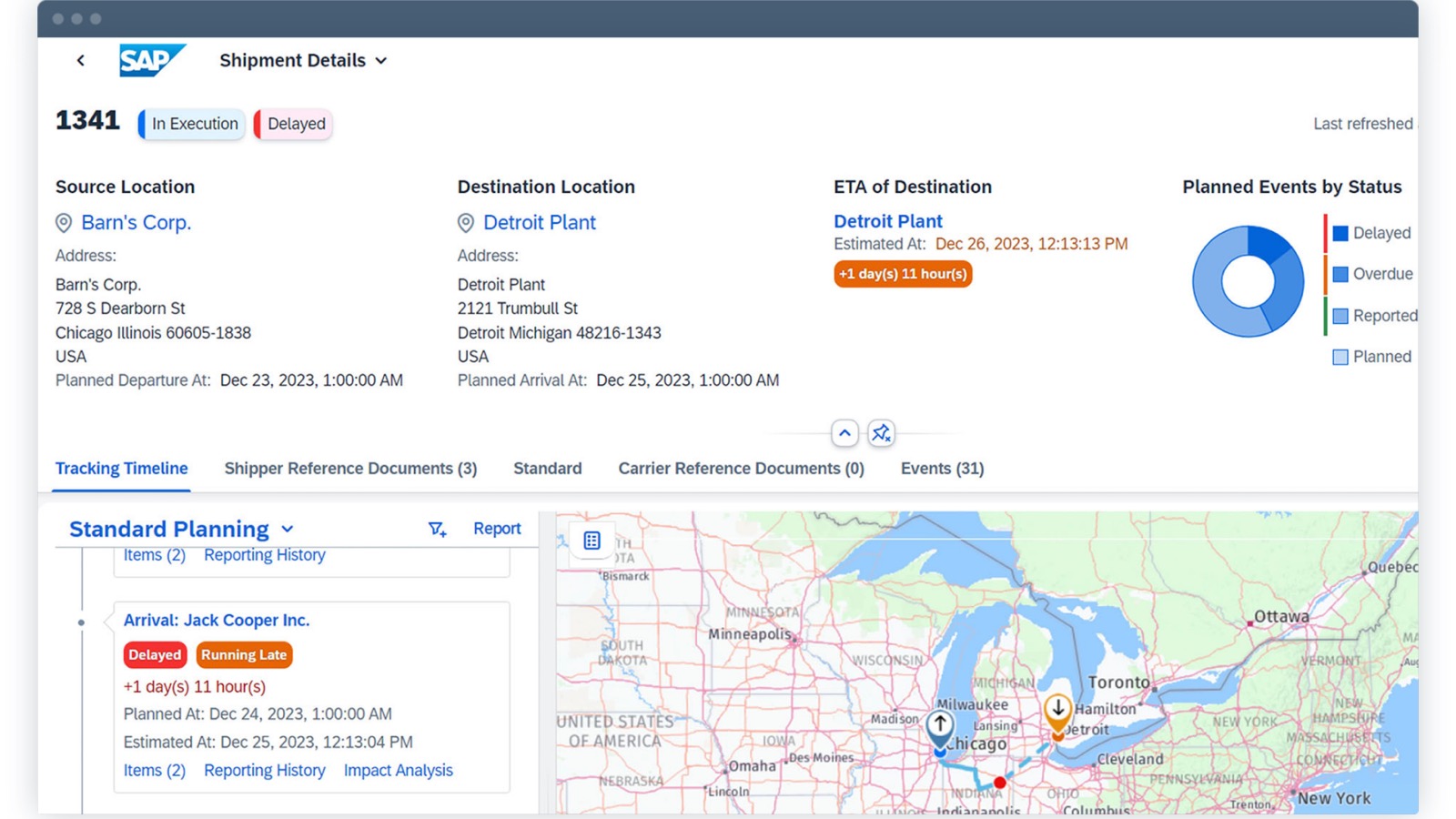
Logistics doesn’t end at the loading dock. A key advantage of SAP Logistics Management is its close integration with transportation and shipping processes. The solution enables delivery consolidation, efficient load space planning, and seamless handover to carriers.
While highly complex global freight networks often require use of the dedicated SAP Transportation Management (SAP TM) solution, SAP LGM already provides the tools needed to handle shipping quickly and without any errors for many regional and standardized requirements. Freight documents, shipping labels, and customs information can be generated directly from the system, considerably cutting the administrative effort required at the dock.
Source © SAP
AI-Powered Processes and Smart Automation
Today, digitalizing processes alone is no longer enough to stay competitive in the global marketplace. The key distinguishing factor is making smart use of data. SAP Logistics Management positions itself as a pioneer here – thanks to extensive AI support, with SAP Joule as the central assistant.
SAP Joule: AI Assistance in Day-to-Day Logistics
A key component of this forward-looking approach is SAP Joule, SAP’s generative AI assistant. Users can interact with the logistics system in natural language instead of searching through complex menus. For example, SAP Joule answers questions about at-risk deliveries or about real-time capacity utilization, while also offering targeted solutions to fix the issues. This makes complex analyses more accessible and enables employees to spend more time on value-adding tasks and strategic decisions.
Seamless Integration into the SAP System Landscape
The greatest enemies of an efficient supply chain are disconnected systems and isolated data silos. SAP Logistics Management achieves its full potential thanks to an architecture designed for seamless integration into the entire SAP ecosystem.
SAP LGM is connected to SAP Cloud ERP Public and Private Editions in real time and integrates commercial data, customer orders, and purchase orders directly into logistics. Released orders automatically generate outbound delivery documents and order-picking tasks, while inventory changes are posted to financial accounting immediately.
SAP LGM connects suppliers, freight forwarders, and 3PL providers over SAP Business Network. Advance shipping notices (ASNs) help with preparing for goods receipt, transportation orders are transmitted automatically, and track-and-trace updates increase transparency in the supply chain.
The technical foundation for this is SAP BTP, with its APIs and integration tools. This also allows industry-specific third-party systems to be connected securely and in an update-safe manner, without changing the standardized SaaS core of SAP LGM.
SAP LGM vs. SAP EWM: Which Solution Is Right for Your Company?
SAP LGM and SAP EWM address different requirements. The decisive factors are mainly process complexity, the degree of automation, transportation requirements, integration needs, and the desired level of standardization.
Consider SAP LGM if you:
- would like to model standardized warehouse and logistics processes;
- would like to set up multiple sites with similar processes on a uniform basis;
- are looking for a cloud-based, standards-led solution; and
- would like to keep customization to a minimum.
Consider SAP EWM if you:
- manage complex or highly automated warehouse processes;
- require individual process variants and extensive customization;
- need to integrate material flow and automation technology deeply into warehouse control systems.
Additional Requirements to Review
When choosing a product, companies should also clarify their requirements with respect to transportation planning, automation, third-party systems, and existing SAP systems. Especially for complex integration or transportation processes, it may be helpful to use additional SAP solutions (such as SAP TM) alongside SAP LGM or SAP EWM.
So which solution, or combination of solutions, is suitable should be assessed based on the specific process and system requirements.
Implementing Cloud-Based Logistics Processes Quickly and Efficiently
SAP Logistics Management significantly shortens the time to market compared to traditional systems. Preconfigured processes replace lengthy blueprinting phases, promote best practices, and speed up rollouts, especially when sites have similar requirements. At the same time, the cloud architecture relieves the burden on IT, since SAP takes care of hosting, maintenance, and updates. Companies thus benefit directly from new capabilities such as AI support and advanced analytics without any costly release upgrades. A user-centric interface with guided dialogs, clear visual cues, and lower operating complexity also reduces the time and effort required for onboarding.
Making Logistics Processes Futureproof with SAP Logistics Management
The supply chain transformation cannot wait. Outdated systems pose more than just a risk of inefficiency. In dynamic markets, they also jeopardize delivery capability and, in turn, customer satisfaction. SAP Logistics Management gives companies the opportunity to set up their logistics processes so that they are futureproof, agile, and data-driven.
As a cloud-native, integrated, and AI-powered logistics solution, SAP LGM closes the gap between overly simple basic warehouse management and oversized, highly complex expert systems. It delivers exactly what medium-complexity sites need: standardized processes available out of the box, seamless integration with SAP Cloud ERP and SAP Business Network, and smart capabilities such as SAP Joule to automate day-to-day work.
For companies looking to increase their operational efficiency, digitalize their regional warehouses quickly, and benefit from a modern cloud architecture, SAP LGM is an exceptionally valuable strategic investment. It lets them focus on what matters – delivering to customers on time, cost-efficiently, and without any errors – backed by the combined innovative power of the SAP ecosystem. Companies that set the course today for smart, connected logistics will secure tomorrow’s decisive competitive advantage.